LATIN SCRIPT
Pen and quill
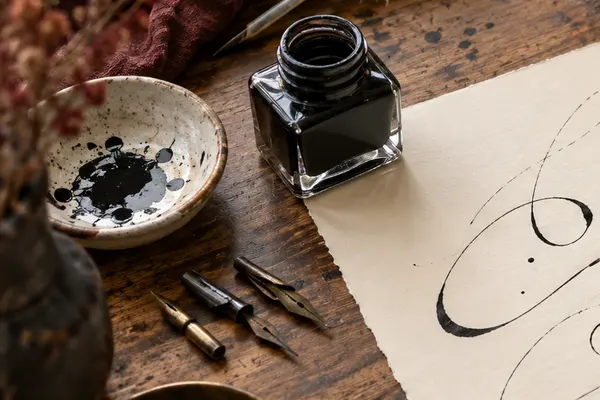
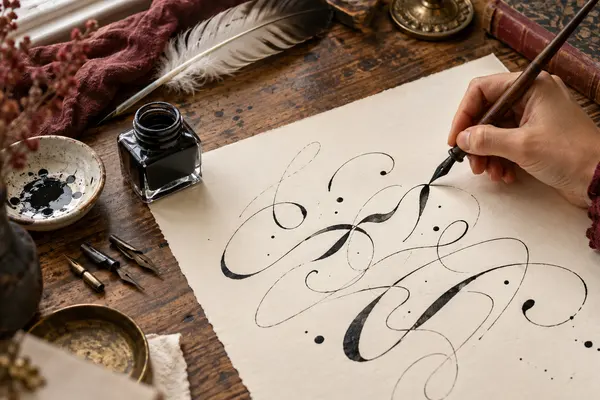
A pen with a broad, flat tip gives thick and thin strokes as it changes direction. Medieval scribes wrote whole books this way on vellum.
See the Book of KellsPEN, BRUSH AND REED
Calligraphy is handwriting slowed down until every stroke is chosen.
A quill on calfskin, a brush on paper, a reed cut to a slanted tip: each tradition grew its letters from the tool in the writer's hand. Here is how three great traditions work, and how one teacher brought the broad pen back, in plain English.
Explore the traditions Meet the three tools
THREE TOOLS
Two traditions are on UNESCO's list
of humanity's living heritage.
LATIN SCRIPT
A pen with a broad, flat tip gives thick and thin strokes as it changes direction. Medieval scribes wrote whole books this way on vellum.
See the Book of KellsUNESCO · 2009
Chinese calligraphers ink five styles of script with a brush, from the formal seal style to the flowing cursive.
Read the factsUNESCO · 2021
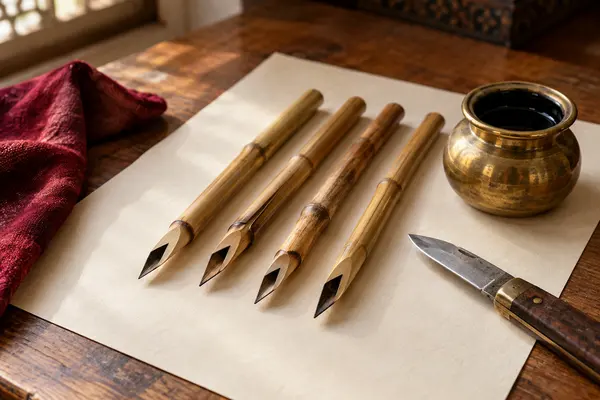
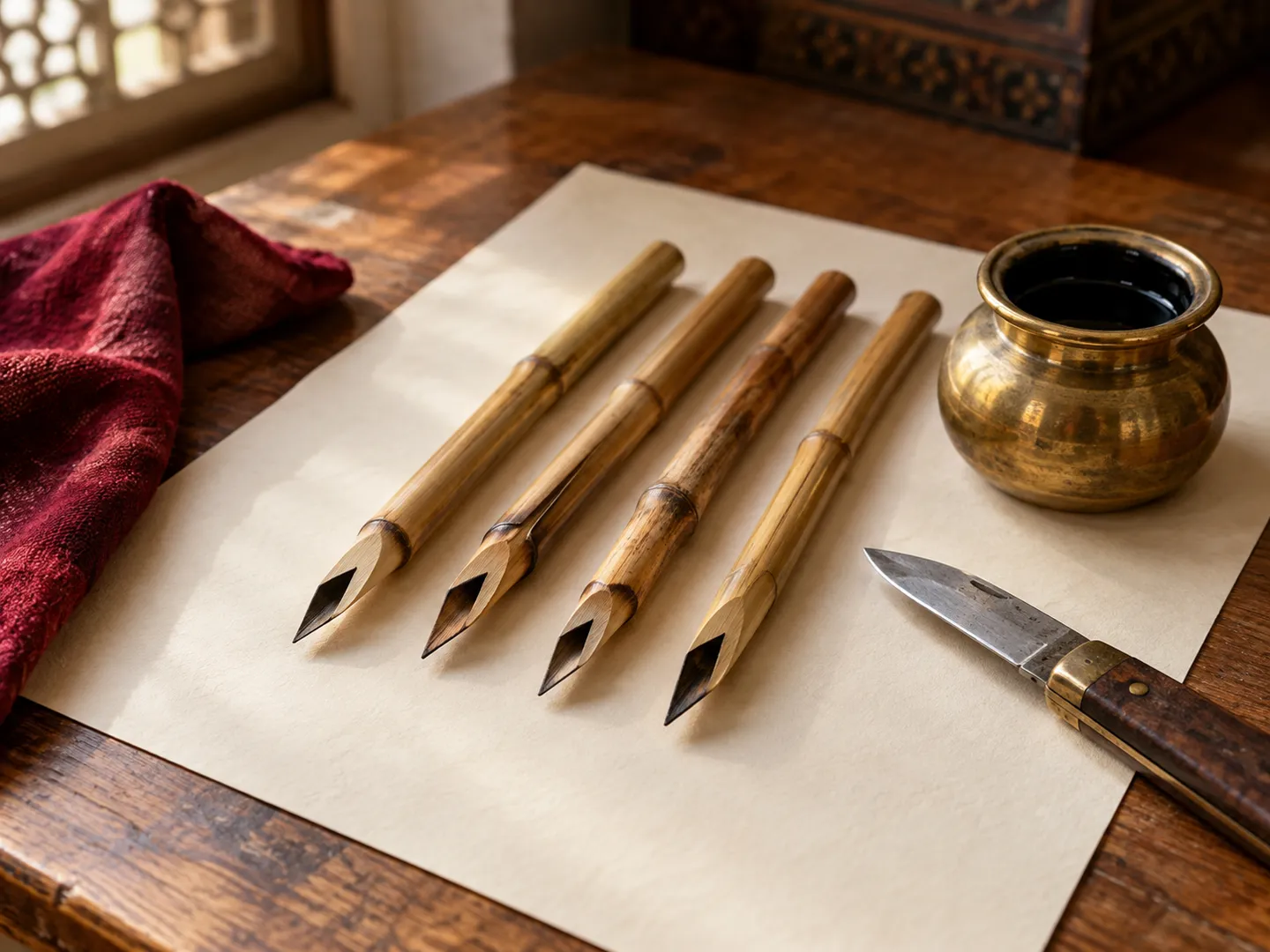
Arabic calligraphy is traditionally written with a qalam cut from reed or bamboo, in a fluid, flowing hand.
Compare the traditionsTRADITION EXPLORER
Pick a tradition to see the tool behind it and one fact from the institutions that look after it: UNESCO, Trinity College Dublin and London Transport Museum.
These are short summaries, not a full history. Each tradition has many regional styles and schools.
TWO NUMBERS WORTH KNOWING
One book from around 800 AD,
and one modern look inside the writing brain.
BOOK OF KELLS · c. 800
Leaves of prepared calfskin
340 folios
The Book of Kells holds the four Gospels in Latin, written in insular majuscule. Its leaves now measure about 330 by 255 mm, after trimming when it was rebound in the 19th century.
HANDWRITING · 2024
Students, sensors on the head
36 and 256
NTNU researchers recorded 36 students with 256 sensors. Connectivity between brain regions increased when they wrote by hand with a digital pen, but not when they typed.
The second result comes from one small study and does not prove that calligraphy improves learning. It does suggest that forming letters by hand engages the brain differently from pressing keys.
CALLIGRAPHY FACTS
Trinity College Dublin says four major scribes copied the text of the Book of Kells, and three artists produced its major decorated pages.
Listed by UNESCO in 2009, it is passed on through traditional master and apprentice teaching and, today, in schools too.
Arabic calligraphy joined UNESCO's list in 2021 through a joint nomination naming 16 Arab states, from Algeria and Morocco to Oman and Saudi Arabia.
Edward Johnston's 1906 book helped re-establish hand-lettering in Britain. In February 1916 he submitted the first block letters for the London Underground.
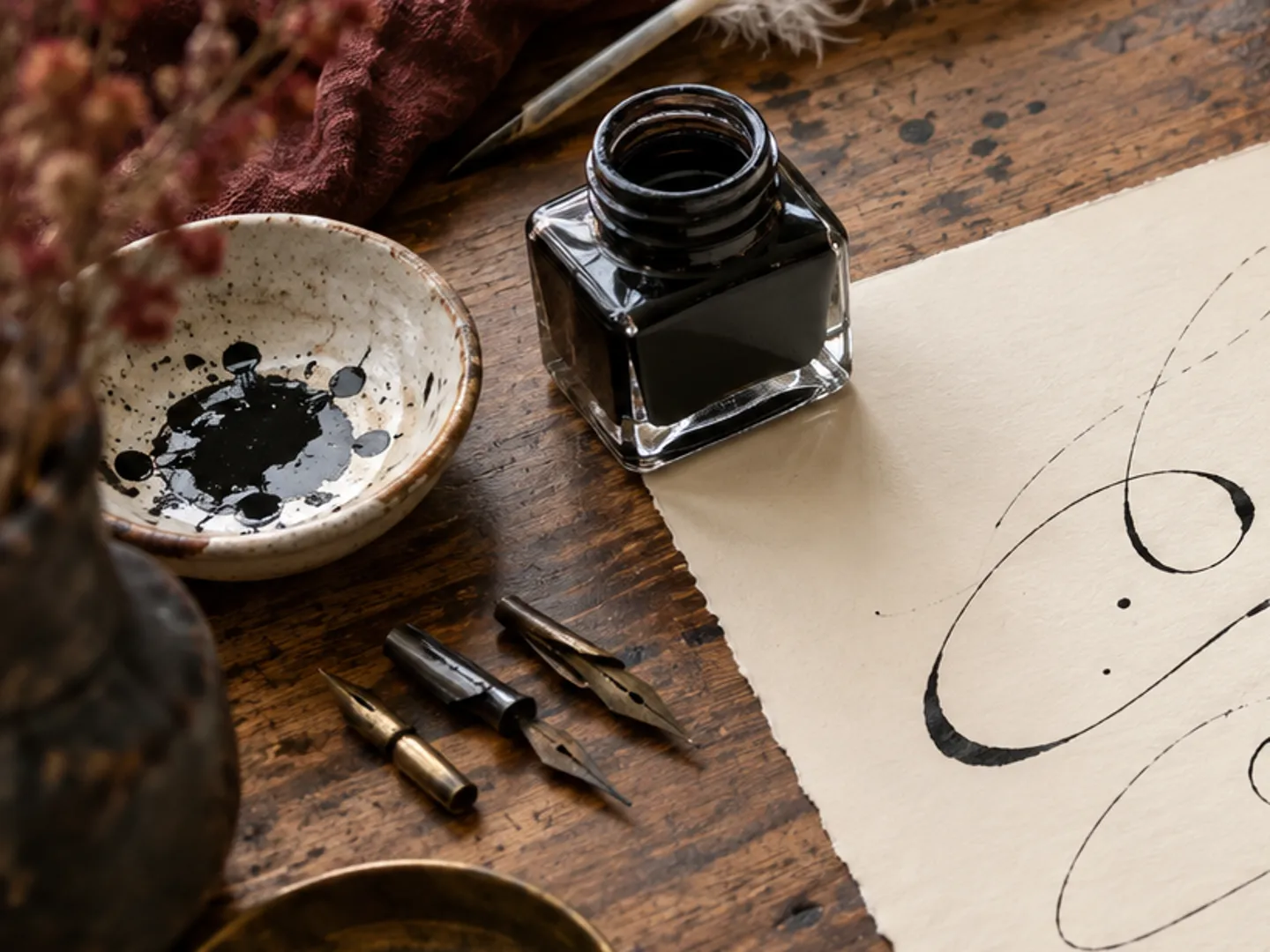
Iron gall ink was used for several centuries. The Library of Congress warns that some formulations are extremely corrosive and can make documents illegible.
START WRITING
A broad-edge pen or chisel-tip marker shows thick and thin strokes straight away, which is what makes calligraphy look like calligraphy.
Hold the edge of the pen at the same slant through every stroke. The thick and thin parts then fall in the same places in every letter.
Draw faint pencil lines for the height of the letters, then write slowly between them, one stroke at a time.
Use modern ink for practice and anything you want to keep. Some historic iron gall recipes are known to damage paper over time.
QUICK QUESTIONS
Short answers to the questions people ask most.
Calligraphy is the art of writing letters by hand with care for their form. UNESCO describes Arabic calligraphy, for example, as the artistic practice of handwriting Arabic script in a fluid manner, and lists both Arabic and Chinese calligraphy as intangible cultural heritage.
Medieval Latin scribes wrote with pens on vellum, as in the Book of Kells. Chinese calligraphers use brushes to ink five styles of script. Arabic calligraphers traditionally write with a qalam cut from reed or bamboo.
Trinity College Dublin, which holds it, says it must have been written close to the year 800. It contains 340 folios of vellum, now about 330 by 255 mm, and four major scribes copied the text.
Iron gall ink was used for several centuries, and the Library of Congress notes that some formulations are extremely corrosive. Ink corrosion can cause loss of text, bleeding, fading and strike-through, and is very hard to stop.
A 2024 study of 36 university students at NTNU recorded brain activity with 256 sensors. Connectivity between brain regions increased when they wrote by hand with a digital pen, but not when they typed. It was a small study of one group.
SOURCES
A NAME WITH A FINE HAND
doodlecalligraphy.com is part of the DoodleSale portfolio. Check the current listing and available purchase or lease options.